How Can Coaching Help 911 Dispatcher Stress?

Last Updated: November 18, 2026
Quick Summary
Coaching helps dispatcher stress by adding structure, accountability, and steady confidential support built around the job, keeping coping skills in use instead of taught once and abandoned. It is educational and forward-focused, not therapy, and works alongside clinical care when needed.
- Acute stress spikes during one call, chronic stress builds from shifts, and burnout is the end result.
- Box breathing, grounding your feet, and naming the stress are coping strategies you can use between calls.
- A fifteen-minute debrief names the call, normalizes the reaction, and flags who needs more support.
- Supervisors can use a weekly ten-to-fifteen-minute coaching cadence separate from performance review.
- Escalate to a qualified mental health professional when sleep loss, withdrawal, or hopelessness appear.
Table of Contents
- Why Dispatcher Stress Builds Over Time
- What Coaching Adds to Stress Management Techniques for Dispatchers
- 911 Dispatcher Coping Strategies You Can Practice on Shift
- Stress Debriefing After Difficult Calls
- Dispatcher Burnout Prevention at the Supervisor and Center Level
- Holding Calm Voice Control Under Pressure
- Scheduling a Free Consultation With Spence's True North
- Frequently Asked Questions
Why Dispatcher Stress Builds Over Time
Dispatcher stress is the cumulative wear that comes from hours of listening, deciding, and holding steady while other people are in crisis.
A qualitative case study on how 9-1-1 telecommunicators perceive and respond to high-stress calls found that dispatchers carry a distinct mix of stress sources, coping habits, and workplace pressures.
Here is what most guides miss: the problem is rarely one bad call. It is the absence of recovery between calls.
Acute Stress, Chronic Stress, and Burnout
These three are not the same, and they need different responses.
- Acute stress spikes during a single high-pressure call, then fades.
- Chronic stress builds from shift work, understaffing, and constant vigilance.
- Burnout is the end result: exhaustion, detachment, and a drop in confidence.
According to NENA's report on profession-wide stress, fewer than half of respondents felt adequately equipped for every incident type, and around 38% felt ill-prepared for some incidents.
Knowing which one you are facing changes what helps. Coaching strategies for 911 dispatcher stress start with that distinction.
What Coaching Adds to Stress Management Techniques for Dispatchers
Coaching adds structure, accountability, and a person who knows the work. Most stress management techniques for dispatchers are taught once and then left to the individual.
The Office for Victims of Crime report on emergency medical dispatchers describes widespread reliance on unhealthy coping strategies and a lack of resources that might support workers.
At Spence's True North, we approach this through the T.R.U.E. North Protocol, a 25-week trauma-informed educational protocol. It combines neuroscience with guided journaling and grief work.
Coaching Versus Clinical Mental Health Treatment
Coaching and clinical care are different services, and the line matters.
Coaching is educational and forward-focused. It helps you build skills, calm your nervous system, and change habits.
Clinical mental health treatment is delivered by licensed professionals and addresses diagnosable conditions.
If you are unsure whether your experience fits coaching, read this guide on whether trauma is worth coaching.
911 Dispatcher Coping Strategies You Can Practice on Shift
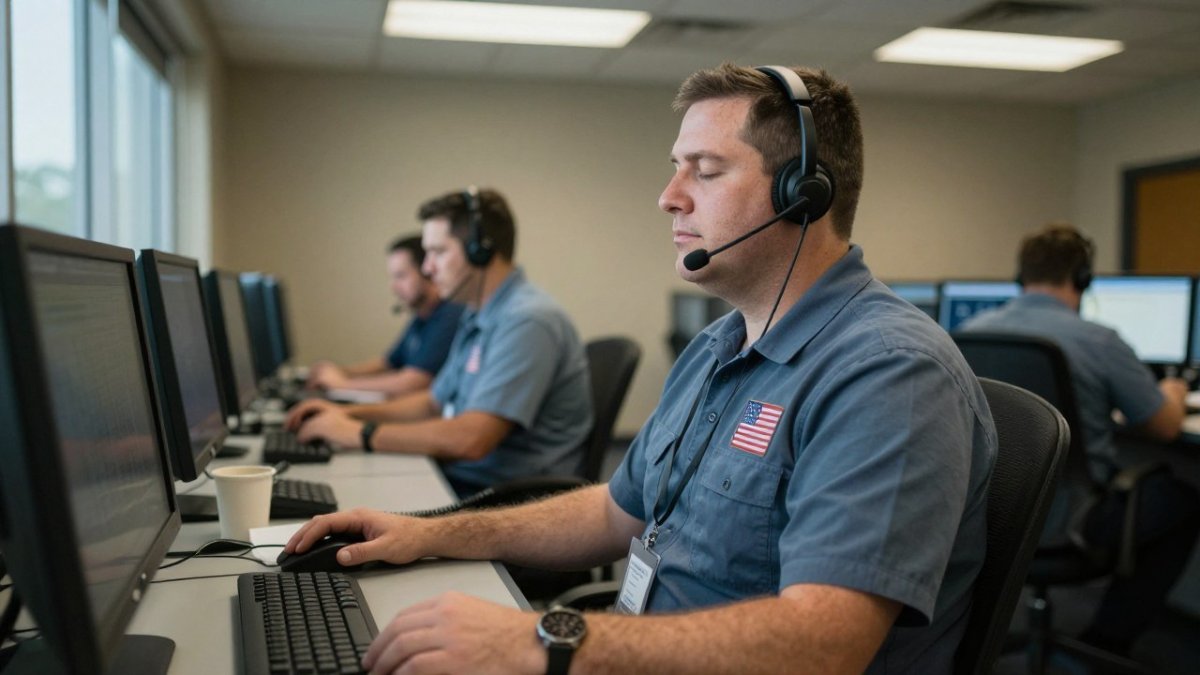
These 911 dispatcher coping strategies work in the chair, between calls, without leaving your console.
- Box breathing. In for four, hold for four, out for four, hold for four. Two rounds reset your pace.
- Ground your feet. Press both feet into the floor and notice the contact. It pulls you out of the call and into the room.
- Name the stress. Say silently, "This is acute stress." Labeling lowers its grip.
- Release your jaw and shoulders. Dispatchers hold tension there without noticing.
- Take the micro-break. Sixty seconds between calls beats saving it all for the drive home.
For a deeper set of nervous system techniques, see how to calm your nervous system.
Stress Debriefing After Difficult Calls
Stress debriefing after difficult calls is a short, structured conversation that helps a dispatcher process what happened before it settles in. It works best soon after the call, and it works best when it is expected, not optional.
The goal is not to relive the call. The goal is to name it, normalize the reaction, and flag anyone who needs more support.
A Simple Structure
A fifteen-minute debrief can follow four steps:
- Facts. What happened, in plain terms, in under two minutes.
- Body and mind. What you noticed in your body during and after the call.
- What helped. One thing that worked in the moment, even small.
- Next shift. One thing you need before your next shift, and who will help you get it.
Keep it short. A debrief that runs an hour turns into a reliving session, and most dispatchers will avoid the next one.
Peer Debriefing Versus Supervisor Check-In
These are different tools and should not be merged.
Peer debriefing is led by a trained colleague. It works because peers share the language of the console, and it carries less perceived risk.
Supervisor check-ins cover operational recovery: schedule adjustments, time off the console, and follow-up. A supervisor should not try to run a peer debrief, and a peer supporter should not be asked to make staffing decisions.
Sample Check-In Script
A peer supporter can open like this:
- "That call was a hard one. I am not here to review it. I just want to check how you are doing."
- "What is still with you from it?"
- "What did you notice in your body while it was happening?"
- "What has helped before when a call stayed with you?"
Close by naming the next step, whether that is a follow-up, a supervisor conversation, or a referral.
Scenario Practice
Scripts only work if they have been practiced. Run short scenarios in team meetings: a call with a child in distress, a call that ended in a loss, a caller who would not stop talking.
Watch out: a debrief that turns into a critique of call handling shuts down honesty, and the next dispatcher who needs it will not ask.
When Debriefing Is the Wrong Tool
A structured debrief is not a substitute for clinical care. If a dispatcher is showing signs of acute distress that does not settle, or if the reaction is affecting sleep, appetite, or daily function over days, the right step is a referral to a qualified mental health professional.
For related recovery habits, this guide on nervous system regulation for firefighters covers practices that carry over to dispatch work.
Dispatcher Burnout Prevention at the Supervisor and Center Level
Dispatcher burnout prevention is a leadership responsibility, not just a personal one. Individual coping cannot fix a center that offers no recovery time.
What most guides leave out is the middle layer: the supervisor who sits with a dispatcher for fifteen minutes and needs to know what to say. That conversation is a coaching conversation, and it can be planned.
A Repeatable Supervisor Coaching Cadence
A simple cadence beats good intentions. One workable pattern:
- Weekly, ten to fifteen minutes per dispatcher. Short, scheduled, and separate from performance review.
- Within 24 to 72 hours after a critical incident. A brief check-in, not an investigation.
- Monthly, thirty minutes. A longer conversation about workload, skill goals, and recovery habits.
- Quarterly, a reset. Review what has changed and whether outside support is needed.
Keep the cadence visible on the schedule. A check-in that only happens after something goes wrong reads as suspicion, not support.
Opening Prompts That Work
Supervisors often default to "How are you doing?" and get "Fine." Better prompts are specific and low-pressure:
- "What was the hardest part of your week?"
- "Which call is still sitting with you?"
- "What did you do after that call that helped, even a little?"
- "What would make your next shift easier?"
Listen for the answer behind the answer. "I'm tired" after a specific call is different from "I'm tired" every week for a month.
Confidentiality and the Line Between Coaching and Performance Management
Confidentiality is the foundation. If a dispatcher fears their struggles will reach their department file, they will stay silent.
Say the boundary out loud at the start of the first check-in: what stays between you, what you are required to report, and why.
Keep coaching and discipline in separate rooms. A coaching check-in should not become the place where a call-handling error is documented.
When Coaching Is Not Enough
Supervisor coaching has a ceiling. It is educational and supportive, not clinical. It does not diagnose, treat, or cure any condition.
Escalate to a qualified mental health professional when you see patterns such as sustained sleep loss, withdrawal from the team, marked changes in call handling, statements of hopelessness, or increased substance use. Have referral contacts ready before you need them, and offer them the same way you would offer a peer support contact: as a normal next step, not a verdict.
Measuring Whether It Is Working
You do not need a research program to know if the cadence helps. Track a few practical indicators over a quarter:
- Self-reported stress at the start and end of the quarter, on a simple one-to-ten scale.
- Sick leave and unplanned absence trends.
- Retention and transfer requests.
- How often dispatchers use peer support and other support resources.
Treat these as signals, not proof. A center that improves on two or three of them is likely doing something right, and a center that improves on none should change the approach rather than the people.
Holding Calm Voice Control Under Pressure
Calm voice control is a trainable skill, and it starts with your own breathing. Your tone, pacing, and word choice all travel down the line to the caller.
Adrenaline pushes your voice up and your pace faster. Callers hear it and mirror it. Slow down on purpose.
- Drop your pitch slightly at the end of sentences.
- Pause before your first word on a new call.
- Use short, clear instructions.
- Listen fully before you respond.
Active listening and de-escalation are the same muscles. Practice them on routine calls so they are ready on the hard ones.
Scheduling a Free Consultation With Spence's True North
You do not have to wait for a crisis to get support. You can book a free consultation whenever you are ready.
Spence's True North serves veterans, first responders, dispatchers, healthcare workers, and trauma survivors through secure telehealth. Edward J.
Here is what a consultation looks like:
| Step | What Happens | Time |
|---|---|---|
| 1. Reach out | Call or email to request a time | A few minutes |
| 2. Free consult | Talk through your situation and goals | One conversation |
| 3. Fit check | Decide together if coaching is the right path | Same call |
| 4. Next step | Start the T.R.U.E. North Protocol or a referral | Your choice |
Faith-based support is available when you ask for it, and never imposed.
The stress of this work does not have to run your life.
Frequently Asked Questions
How can a 911 dispatcher deal with stress during a shift?
Build small reset points into the shift instead of waiting for a break that may not come. Two slow breaths between calls, dropping your shoulders, and unclenching your jaw take seconds and lower the adrenaline spike. Dispatchers often lack resources to support them, so plan your reset moments in advance. Rotating headset volume, standing during slow stretches, and naming what you feel after a hard call also help. Coaching can turn these into a routine you actually keep.
What are effective coping strategies for 911 dispatchers after a difficult call?
Step away from the console for a few minutes when the center allows it, and write down what happened in plain facts before your mind loops on it. Talk with a peer who understands the work rather than replaying the call alone. How dispatchers perceive and respond to high-stress calls shapes their stress response, and a structured debrief can help. Save bigger processing for after your shift, and keep alcohol and isolation out of the routine.
How is coaching different from therapy for dispatcher stress?
Coaching is educational and forward focused. It helps you build routines, communication skills, and recovery habits, and it does not diagnose, treat, or cure any condition. Therapy is provided by licensed clinicians and addresses clinical mental health concerns. Spence's True North offers trauma-informed coaching through secure telehealth and will refer you to clinical care when that is the right fit. Many dispatchers use coaching for everyday stress management and see a clinician for anything clinical. The two can run side by side.
What are signs that a 911 dispatcher may need additional support?
Watch for sleep that does not recover you, irritability that spills into home life, dread before shifts, numbness toward callers, and a growing gap from people you trust. Many dispatchers feel stretched at times, so feeling this way is common rather than a personal failing. If these signs persist for weeks, talk with a coach or a mental health professional. Asking early is a strength, not a weakness.
